Custom Search
Showing posts with label Dangerous. Show all posts

Sunday, May 13, 2012

Top 10 Most Extremely Dangerous And Unusual Places

Top 10 Most Extremely Dangerous And Unusual Places

Door to Hell – Turkmenistan

This has featured on listverse before, but it would be remiss of us to exclude it from this list. While drilling in Derweze in Turkmenistan in 1971, geologists accidentally found an underground cavern filled with natural gas. The ground beneath the drilling rig collapsed, leaving a large hole with a diameter of about 50-100 meters. To avoid poisonous gas discharge, scientists decided to set fire to the hole. Geologists had hoped the fire would go out in a few days but it has been burning ever since. Locals have named the cavern The Door to Hell. As you can see from the picture above, it is one hell of an amazing place, but certainly one you wouldn’t want to visit.

Top 10 Most Extremely Dangerous And Unusual Places

Asbestos Mine – Canada

Asbestos is a set of six naturally occurring silicate minerals highly prized for their resistance to fire and sound absorption abilities. On the downside, exposure to this stuff causes cancer and a variety of other diseases. It is so dangerous that the European Union has banned all mining and use of asbestos in Europe. But, for those curious enough to want to get close to the stuff, all is not lost. In Canada at the Thetford Mines, you can visit an enormous open pit asbestos mine which is still fully operational. The workers in the mines aren’t required to wear any sort of respiratory protection, and in some sections of the nearby town, residential areas are butted right next up against piles of asbestos waste. The mine offers bus tours of the deadly environment during the summer months. Tickets are free (would you expect it to be any other way?). If you decide to visit, don’t forget your full body bio-hazard suit.

Top 10 Most Extremely Dangerous And Unusual Places

Mud Volcanoes of Azerbaijan – Azerbaijan

In the Spring of 2001, volcanic activity under the Caspian Sea off the Azeri coast created a whole new island. In October 2001 there was an impressive volcanic eruption in Azerbaijan at Lokbatan, but there were no casualties or evacuation warnings. But Azerbaijan does not have a single active volcano, at least not in the usual sense of the word. What Azerbaijan does have is mud volcanoes – hundreds of them. Mud volcanoes are the little-known relatives of the more common magmatic variety. They do erupt occasionally with spectacular results, but are generally not considered to be dangerous – unless you happen to be there at the wrong time: every twenty years or so, a mud volcano explodes with great force, shooting flames hundreds of meters into the sky, and depositing tonnes of mud on the surrounding area. In one eruption, the flames could easily be seen from 15 kilometers away on the day of the explosion, and were still burning, although at a lower level, three days later.

Top 10 Most Extremely Dangerous And Unusual Places

Ramree Island – Burma

Ramree Island in Burma is a huge swamp home to 1000s of salt water enormous salt water crocodiles, the deadliest in the world. It is also home to malaria carrying mosquitos, and venomous scorpions. During the Second World War, the island was the site of a six week battle in the Burma campaign. Here is a description of one of those horrifying nights: “That night [of the 19 February 1945] was the most horrible that any member of the M.L. [motor launch] crews ever experienced. The scattered rifle shots in the pitch black swamp punctured by the screams of wounded men crushed in the jaws of huge reptiles, and the blurred worrying sound of spinning crocodiles made a cacophony of hell that has rarely been duplicated on earth. At dawn the vultures arrived to clean up what the crocodiles had left…Of about 1,000 Japanese soldiers that entered the swamps of Ramree, only about 20 were found alive.”

Top 10 Most Extremely Dangerous And Unusual Places

Great Pacific Garbage Patch – Pacific Ocean

The Great Pacific Garbage Patch, also described as the Pacific Trash Vortex, is a gyre of marine litter in the central North Pacific Ocean located roughly between 135° to 155°W and 35° to 42°N. Most current estimates state that it is larger than the U.S. state of Texas, with some estimates claiming that it is larger than the continental United States, however the exact size is not known for sure. The Patch is characterized by exceptionally high concentrations of pelagic plastics, chemical sludge, and other debris that have been trapped by the currents of the North Pacific Gyre. The patch is not easily visible because it consists of very small pieces, almost invisible to the naked eye, most of its contents are suspended beneath the surface of the ocean. This is not a place the average Joe would want to visit.

Top 10 Most Extremely Dangerous And Unusual Places


Alnwick Poison Gardens- England

Inspired by the Botanical Gardens in Padua, Italy (the first botanical garden which was created to grow medicinal and poisonous plants in the 1500s), the Alnwick Poison Garden is a garden devoted entirely to plants that can kill. It features many plants grown unwittingly in back gardens, and those that grow in the British countryside, as well as many more unusual varieties. Flame-shaped beds contain belladonna, tobacco and mandrake. The Alnwick Garden has a Home Office license to grow some very special plants; namely, cannabis and coca which are found behind bars in giant cages – for obvious reasons.

Top 10 Most Extremely Dangerous And Unusual Places

Izu Islands – Japan

The Izu Islands are a group of volcanic islands stretching south and east from the Izu Peninsula of Honshu, Japan. Administratively, they form two towns and six villages; all part of Tokyo. The largest is Izu Oshima, usually called simply Oshima. Because of their volcanic nature, the islands are constantly filled with the stench of sulfur (extremely similar to the smell of thousands of farts). Residents were evacuated from the islands in 1953 and 2000 due to volcanic activity and dangerously high levels of gas. The people returned in 2005 but are now required to carry gas masks with them at all times in case gas levels rise unexpectedly.

Top 10 Most Extremely Dangerous And Unusual Places

Yungas Road – Bolivia

The North Yungas Road (Road of Death or Death Road) is a 61 kilometres (38 mi) or 69 kilometres (43 mi) road leading from La Paz to Coroico, 56 kilometres (35 mi) northeast of La Paz in the Yungas region of Bolivia. It is legendary for its extreme danger with estimates stating that 200 to 300 travelers are killed yearly along it. The road includes crosses marking many of the spots where vehicles have fallen. The road was built in the 1930s during the Chaco War by Paraguayan prisoners. It is one of the few routes that connects the Amazon rainforest region of northern Bolivia, or Yungas, to its capital city. Because of the extreme dropoffs of at least 600 metres (2,000 ft), single-lane width – most of the road no wider than 3.2 metres (10 ft) and lack of guard rails, the road is extremely dangerous. Further still, rain, fog and dust can make visibility precarious. In many places the road surface is muddy, and can loosen rocks from the road.

Top 10 Most Extremely Dangerous And Unusual Places

The Zone of Alienation – Eastern Europe

The Zone of Alienation is the 30 km/19 mi exclusion zone around the site of the Chernobyl nuclear reactor disaster and is administrated by a special administration under the Ukrainian Ministry of Extraordinary Situations (Emergencies). Thousands of residents refused to be evacuated from the zone or illegally returned there later. Over the decades this primarily elderly population has dwindled, falling below 400 in 2009. Approximately half of these resettlers live in the town of Chernobyl; others are spread in villages across the zone. After recurrent attempts at expulsion, the authorities became reconciled to their presence and even allowed limited supporting services for them. Because of looting, there is a strong police presence – so be warned, if you visit, you may either be shot or get radiation poisoning – and we all know how awful that can be.

Top 10 Most Extremely Dangerous And Unusual Places

Ilha de Queimada Grande – Brazil

Off the shore of Brazil, almost due south of the heart of São Paulo, is a Ilha de Queimada Grande (Snake Island). The island is untouched by human developers, and for very good reason. Researchers estimate that on the island live between one and five snakes per square meter. That figure might not be so terrible if the snakes were, say, 2 inches long and nonvenomous. The snakes on Queimada Grande, however, are a unique species of pit viper, the golden lancehead. The lancehead genus of snakes is responsible for 90% of Brazilian snakebite-related fatalities. The golden lanceheads that occupy Snake Island grow to well over half a meter long, and they possess a powerful fast-acting poison that melts the flesh around their bites. This place is so dangerous that a permit is required to visit.


[Via]
read more...

Monday, April 16, 2012

Most Dangerous Killers On Earth


1. Jack the Ripper

Jack was one of the most well-known members of “butchers’ guild”. In spring 1888 he stimulated terror over London slaughtered prostitutes. More than 7 women faced his fatalities, Jack the Ripper was never righteous. Due to hundreds of books and movies people started writing and started making movies about his life, he became famous.

2. Charles Manson

During 1960ths Charles was a legendary and famous killer. He led a quasi-commune, which was later called Manson’s Family. In 1969 some brutal members of the Family committed a maximum number of murders and Manson was send to life imprisonment as he was considered to be the mastermind of all crimes.

3. Harold Shipman

Harold was also known as Doctor Death. He has been killing people for 23 years. 218 victims were his patients, mostly aged people. Shipman killed without any explanation. He just liked to imagine himself a god. His victims mostly died of heroin lethal doses. Shipman was commuted to life imprisonment in 2000.

5. Anatoliy Onoprienko

This is one of the most bloodthirsty maniacs of former Soviet Union. For years he has been travelling around Ukraine and killing people mostly for no reason. He is still alive and serves his life imprisonment in one of Ukrainian prisons for murdering 52 people.

4. Andrew Chikatilo

This Russian maniac is well known all over the word. He was executed in 1994 for 53 (65 according to some data) premeditated murders: 21 boys, 14 girls, and 17 grown-up women.


read more...

Friday, January 28, 2011

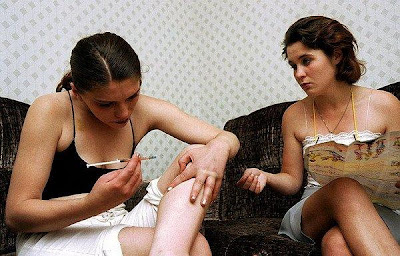
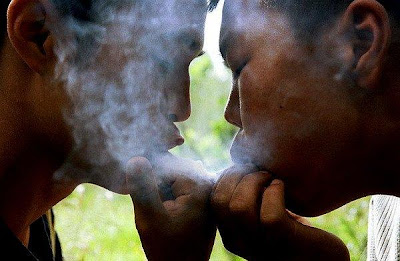
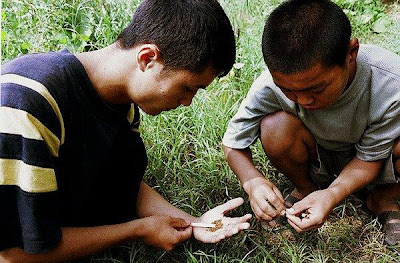
Human Killing Themselves With Drugs Addiction

Drugs Addiction

t’s up to you what to do with your life. These people have made a decision to flush their life away…

Drugs Addiction
Drugs Addiction
Drugs Addiction
Drugs Addiction
Drugs Addiction
Drugs Addiction
Drugs Addiction
Drugs Addiction
Drugs Addiction
Drugs Addiction


Source
read more...

Tuesday, January 4, 2011

10 World's Most Dangerous Jobs

Miners

Most Dangerous Jobs

Gilberto Angulos does not need to say a word to tell the tale of working 30 years in Chile's mines. His broken body does all the talking for him. A jagged scar runs down his forehead. A metal plate keeps his fractured left forearm together. A bone never properly set juts from his left shoulder. The injuries are the remnants of a mine explosion that nearly killed him. In 2003, Angulos was driving excavation equipment in a large copper mine when he felt a rush of air. Instead of being killed, Angulos was taken 1,300 miles (2,092 km) south to Santiago, where he spent a year in the hospital. The damage to the miner was permanent. Now the San Jose mine collapse and got trapped 33 men in Chile. The owner and operator of that mine, the San Esteban Mining Co., did not complete promised improvements to the mine where the men were trapped for 70 days, 2,300 feet (701 meters) underground. Many of the 33 trapped miners and their peers had had numerous brushes with death in the depths of a mine. Mario Gomez had two fingers sliced off by falling rocks. Victor Segovia spent a year recovering after a rock slammed into his back. Franklin Lobos was trapped for three hours during a previous cave-in. Hector Avila worked 20 years in the mines and became close friends with several of the recently-trapped miners when he worked with them at the San Jose mine. A geologist was killed in the same 2007 accident, prompting the closure of the San Jose mine. But the mine was reopened soon after.

Since 2000, 374 miners have died practicing their trade in Chile, according to government statistics. That seems like a fun job, doesn't it?

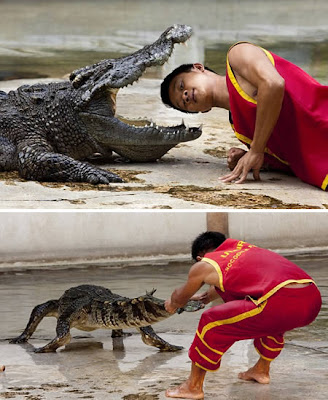
Crocodile Wrestlers

Most Dangerous Jobs

The daily grind at the office may not seem so bad after viewing these startling images.
For, no matter how grumpy your boss may be this morning, at least you aren't actually risking life and limb by sticking your head in his jaws.
But that is exactly what the crocodile wrestlers at a Thai zoo do on a daily basis. The men at the Samphran Elephant Ground and Zoo perform what may well be the world's most dangerous job. The wranglers have been performing the stunts at the zoo on the outskirts of Bangkok, Thailand, since it was set up in 1985. During the hour-long shows they stick their head between the jaws of some of the zoo's biggest crocs, in the style of Krai Thong, a legendary Thai crocodile hunter.

Deminers

Most Dangerous Jobs

Demining or mine clearance is the process of removing either land mines, or naval mines, from an area. Manual demining is still the best system currently in use because it has been proven that the current generation of mine clearance machines can only clear up to an 80 percent certainty at best, whereas manual demining can give a 99.6 percent certainty. But this work can be very dangerous. Demining resulted in at least 500 deaths from 1996 to 2002.

Fishermen

Most Dangerous Jobs

129 deaths per 100,000 people employed in the industry and 61 injuries per 100,000 for 2008, makes working in the Fishing Industry the number one most dangerous job in the world. A Cable TV show, Deadliest Catch, on the Discovery Network, shows real crab fishers in the Bering Sea. They make a living working many hours a day, 7 days a week, often in the dark, without a break for long stretches of time. They must perform the catch within the window of opportunity, or lose their income for the year. Freezing water and icy boat decks can lead to horrific accidents, and storms can swamp small fishing vessels, sometimes claiming entire crews.

Helicopter Linemen

Most Dangerous Jobs

The first time you see these guys over the power lines you may think it's fake. But linemen who work from helicopters are for real and they are considered a highly specialized area of line work; few linemen have the special training to perform it. Incredible as it seems, live high voltage transmission lines can be worked barehanded. The lineman must be isolated from the ground by using an insulated bucket truck or other method. The lineman wears special conductive clothing which is connected to the live power line, at which point the line and the lineman are at the same potential, allowing the lineman to handle the wire safely.
Live wire work is extremely common on low voltage distribution systems within the UK as all linesmen are trained to work 'live'. Live wire work on high voltage distribution systems within the UK is carried out by specialist teams. These teams are sometimes referred to as 'Hot Glove' teams.

Lion Trainers

Most Dangerous Jobs

Newlyweds from Montana, celebrating in Las Vegas were checking out the lion enclosure at the MGM Grand Hotel when they videotaped these images. The man was videotaping the male and female lions and their two trainers when all of a sudden the male took exception at something that was going on and made a lunge. A struggle ensued and a female also decided to join the fray but the trainer managed to break free with the help of his colleague and made a hasty escape from the enclosure with the male still appearing extremely agitated. There is no evidence of any blood being spilled, but the trainer is evidently in great pain during the attack. Soundproof glass muffled any noise, however. Jack Hanna appeared on GMA and he said the attack would be considered mild. The trainer was lucky it was the male getting over-excited as females launch much more devastating attacks.

Loggers

Most Dangerous Jobs

Logging takes an annual toll like few other occupations. The biggest hazard, according to Roger Smith of RL Logging in Olympia, Wash., comes from logging mountain slopes. "You're working steep terrain with 70-degree, 80-degree grades with rocks and sliding logs," he says. About half the time, he's taking down 60- to 70-year-old trees with trunk diameters of 30 inches or more. If not felled correctly, these can go crashing down slopes, rolling over anyone in their paths. The old forest canopies often have those snags, which are big dead branches that break off and can fall erratically when the tree comes down. Loggers call them "widow makers." Even after the trees are cut, the job of loading them can be tough. "Somebody just got killed here recently," he says. "He was running a harvester and one of the teeth of the chain broke off and went right through the bulletproof glass window of his cab."

Target Girls

Most Dangerous Jobs

Target girl is a term sometimes used in circus and vaudeville to denote a female assistant in "impalement" acts such as knife throwing, archery or sharpshooting. The assistant stands in front of a target board or is strapped to a moving board and the impalement artist throws knives or shoots projectiles so as to hit the board but miss the assistant. The presence of an assistant as a human target provides a powerful element of risk. Without assistants placing themselves in danger these acts would be simple demonstrations of accuracy, but with the potential for injury or death the show is much more dramatic. Where can I apply?

Skyscraper Windows Cleaners

Most Dangerous Jobs

You need nerves of steel to be a window cleaner in Dubai. When this worker spotted a mark on an apartment window, he just had to pop out to give the glass a quick wipe with a squeegee. Nothing odd about that – except that the apartment was located 400ft up on the 34th floor of a tower block in Jumeirah Beach, Dubai. He stepped out on to the narrow ledge and, holding the frame, stretched across to wipe away the annoying smudge. As he takes his life into his hands, at least he has the sense to hold on to the window frame, even if it is by his fingertips, as he goes about his task. He was snapped making sure the windows were sparkling by a resident in a neighbouring apartment block. He didn't have a safety harnesses or cradles and helmets. He had nothing. When it comes to safety among its massive immigrant workforce, the Dubai authorities have a dubious record. Conditions in which immigrants are expected to work have been a subject of discussion in the United Arab Emirates for many years. Yet the majority of these employees have no voice, especially when it comes to their own safety. They are also aware that, if they are deported, there are thousands of others willing to take their place.

Construction Worker

Most Dangerous Jobs

These are the people you see hoisting those giant steel beams to create the structural framework of office buildings and other large projects. The United Steelworkers union claims that deaths among structural construction workers are increasing as owners and managers try to cut costs. The most common cause of death among them, according to the BLS, is falling.
read more...